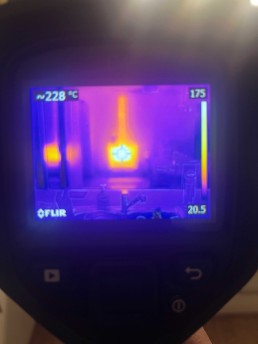
Thermal imaging cameras work by detecting invisible infrared radiation (heat) emitted by objects and converting it into a visible picture that shows temperature differences.pyrosales+2
All objects above absolute zero give off infrared energy; hotter objects emit more of it. A thermal camera has a special lens that focuses this infrared radiation onto a sensor array, often a microbolometer, made up of many tiny sensing elements (pixels). Each pixel changes its electrical resistance or generates a small signal depending on how much infrared energy it receives, creating a grid of raw temperature-related data.dwyeromega+2
Electronics inside the camera process these signals, apply calibrations, and convert them into actual temperature values or relative temperature levels. The camera then maps these temperatures to colors or shades of gray in a process called false-color imaging, where cooler areas might appear blue or purple and hotter areas yellow, red, or white. This processed image is shown on the display as a thermal image, clearly highlighting hot spots, cold spots, and gradients.fluke+2
Because they sense emitted heat instead of reflected visible light, thermal cameras can “see” in complete darkness, light smoke, and some obscuring conditions, making them useful in firefighting, electrical inspections, building diagnostics, veterinary and medical screening, wildlife observation, and security. Their effectiveness depends on factors such as sensor resolution, thermal sensitivity (the smallest temperature difference they can detect), and correct adjustment of parameters like emissivity and reflected background temperature.flir+2